
The Journal
Guided Dental Implants in Woodbridge NJ | Lumen Dental
By Dr. Omer YetiskulSeptember 16, 2026
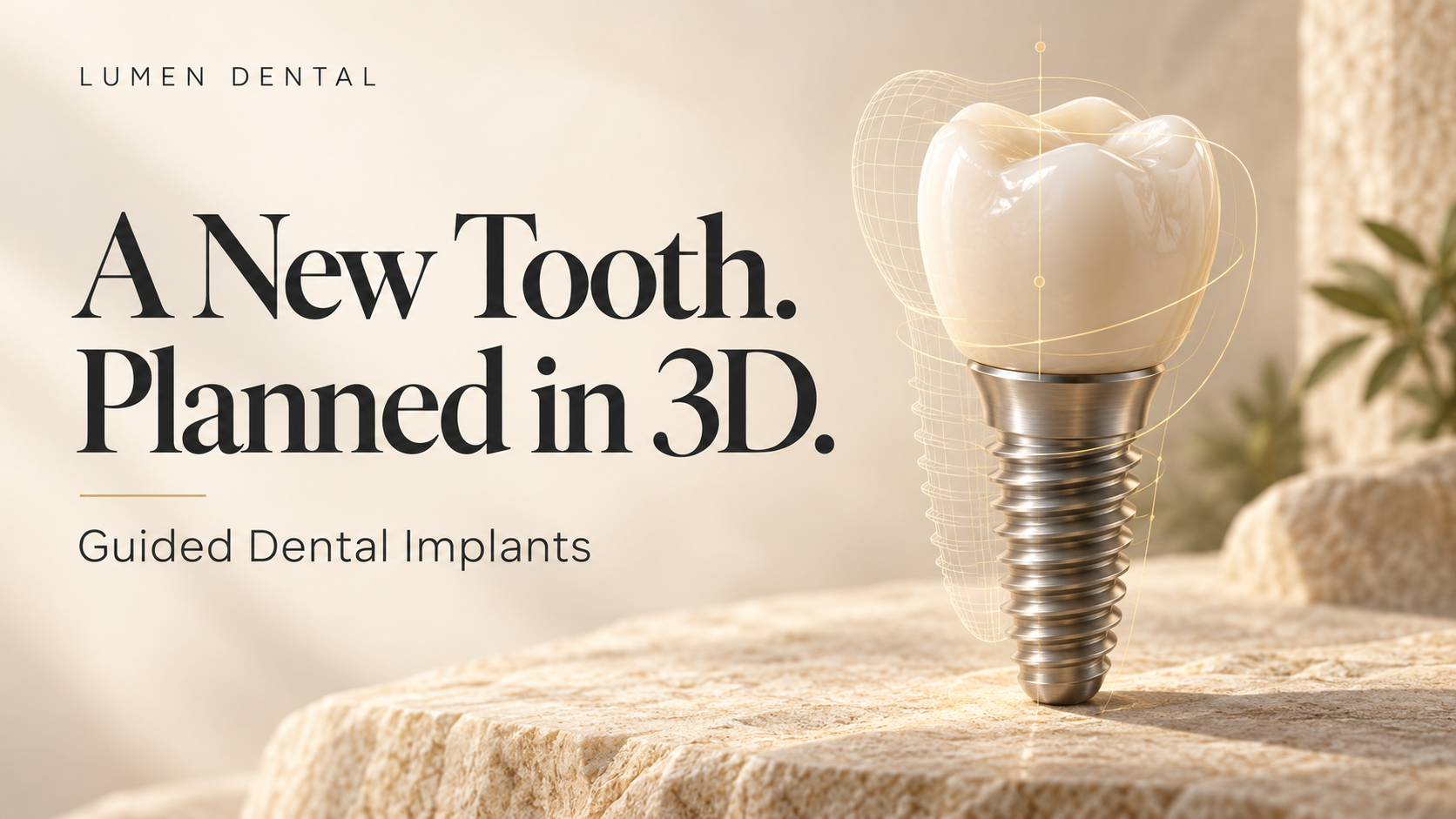
Guided Dental Implants in Woodbridge, NJ
Replacing a Missing Tooth With 3D Guided Dental Implants
A missing tooth can change how you chew, how you smile in photos, and even which side of your mouth you use at dinner. If you are considering a dental implant, you may already be wondering about pain, cost, and recovery.
But there is another important question worth asking:
«How does the dentist decide exactly where your new tooth should go?»
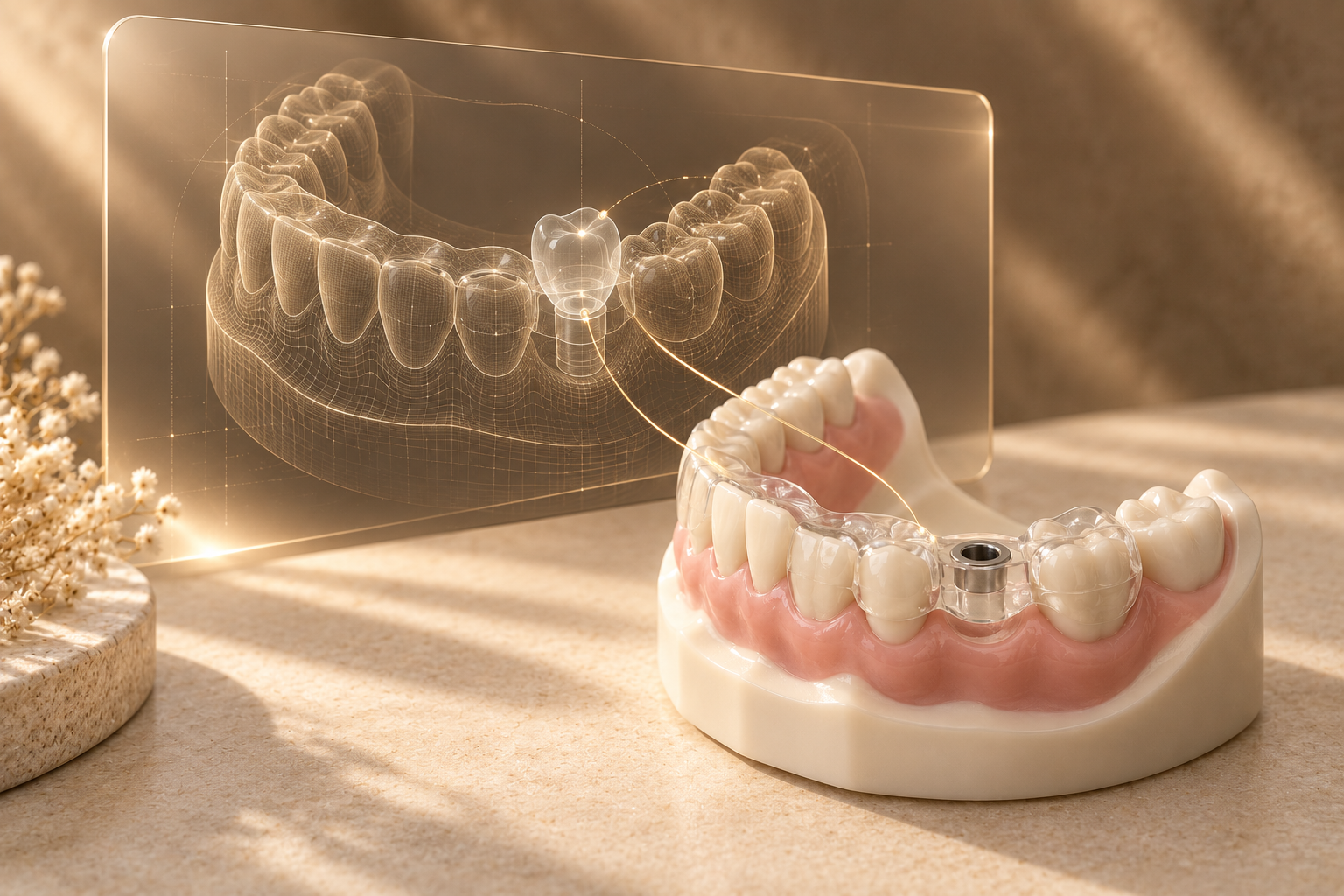
That decision starts before surgery. With guided implant treatment, the dentist plans the implant using a three-dimensional view of your jaw and a custom guide that helps carry that plan into the procedure.
At Lumen Dental in Woodbridge, NJ, digital planning is part of our approach to dental implants. Understanding how that planning works can help you ask better questions and feel more prepared for your consultation.
---
What Is Guided Dental Implant Surgery?
Guided dental implant surgery uses 3D imaging, computer planning, and a custom surgical template to help a dentist place an implant in a planned position and direction.
Depending on the system, the guide can also help control drilling depth and guide insertion of the implant itself. The dentist performs the surgery and checks that the guide fits correctly. The International Team for Implantology explains these guidance methods here: https://blog.iti.org/clinical-insights/static-dynamic-and-robotic-technologies-in-the-world-of-digitally-aided-implant-surgery/
Think of the guide as a template made specifically for your mouth. It fits over supporting teeth or tissues and has an opening that directs the surgical instruments. It is used during treatment and then removed.
«Important note: “Guided” describes how the implant is placed. It is not a different type of replacement tooth.»
---
First, Understand the Three Parts of a Replacement Tooth
For a typical single-tooth implant, the finished result has three main parts:
1. The Implant
A small post placed in the jawbone to act as an artificial root.
2. The Abutment
A connector between the implant and the replacement tooth.
3. The Crown
The visible tooth you use to chew and show when you smile.
Guided surgery concerns the position of the supporting implant. The crown still needs to be designed to fit your bite and the surrounding teeth.
The FDA’s patient guide to dental implants explains how these components work together: https://www.fda.gov/medical-devices/dental-devices/dental-implants-what-you-should-know
---
Why the Position of Your Implant Matters
The space you see when you smile is only part of the picture. Under the gum, the dentist must consider the available bone, nearby tooth roots, nerves, and, in the upper jaw, the sinus.
The dentist also plans for the tooth that will sit above the implant. Its position affects how the final restoration can be shaped and how it fits with the rest of your mouth.
«In other words: Implant planning should begin with the final tooth in mind, not just the empty space.»
For example, a missing back tooth may appear to have plenty of room between the neighboring teeth. But the bone underneath may be narrower or angled differently. Three-dimensional planning helps the dentist assess both spaces together before choosing the implant position.
Guided surgery helps transfer that plan to the mouth, but small differences between the planned and actual position can still occur. The dentist must allow safety margins and use clinical judgment throughout.
ITI consensus on computer-guided implant surgery: https://academy.iti.org/academy/consensus-database/consensus-statement/-/consensus/computer-guided-implant-surgery/1213
---
What Happens During the Guided Implant Process?
1. Assess Your Tooth and Your Health
If the tooth is still present, the first question is whether it can be saved. If replacement is appropriate, the dentist considers your gums, bone, health history, and treatment goals.
Bring an up-to-date medication list and explain any concerns about surgery.
Implants are one option. Depending on your situation, a bridge or removable replacement may also be worth discussing. The American Academy of Periodontology emphasizes preserving natural teeth when possible: https://www.perio.org/press-release/statement-from-the-american-academy-of-periodontology-aap-on-the-importance-of-preserving-natural-teeth/
2. Build a Three-Dimensional Picture
A dental cone beam CT scan, usually called CBCT, provides a 3D view of the jaw. A scan or impression of the teeth records their surface shape. These records can be combined for planning.
The dentist decides which imaging is appropriate for your case.
3. Plan the Implant and Make the Guide
Using the records, the dentist selects the planned implant position in relation to your anatomy and the intended replacement tooth.
A custom surgical guide is then produced, often with 3D printing. Its fit and stability need to be checked before it is used.
Some guides direct only the initial drill. Others guide more of the preparation and implant placement.
«Helpful question to ask: Which steps will the guide control in my treatment?»
ITI’s guidance on digital planning and surgical guides: https://blog.iti.org/clinical-insights/digital-planning-guide-creation-tips-tricks-in-guided-implant-placement/
4. Place the Implant
The area is numbed for surgery. The dentist positions the guide and uses the appropriate instruments to prepare the implant site.
Depending on the treatment, the gum may need to be opened and stitches may be necessary. Bone grafting or a tooth extraction can add steps.
5. Allow Healing and Complete the Tooth
The bone needs time to heal around the implant before it can support planned chewing forces. This can take several months or longer.
The final tooth is attached when the dentist determines the implant and surrounding tissues are ready.
Ask what temporary replacement, if any, you will have during healing.
FDA guidance on the healing period: https://www.fda.gov/medical-devices/dental-devices/dental-implants-what-you-should-know
---
Guided Placement vs. Conventional Placement
Conventional implant surgery can also involve careful digital planning and 3D imaging. The practical difference is whether a guide directs the instruments during the procedure.
Guided Placement With a Template
- The dentist can plan in 3D.
- A custom guide assists with selected steps.
- The guide must be designed, made, and checked.
- Stitches or grafting may still be needed, depending on the case.
Conventional Freehand Placement
- The dentist can also plan in 3D.
- The dentist controls the instruments without a physical guide.
- No custom surgical guide is needed.
- Stitches or grafting may still be needed, depending on the case.
«A guide is a tool for carrying out a plan. Your dentist’s experience, the quality of the plan, and your individual anatomy remain essential. Neither method guarantees success.»
---
Does Guided Surgery Mean Less Pain or Faster Recovery?
In selected cases, a guide allows the dentist to work through a smaller opening in the gum. You may hear this called flapless surgery. It can reduce the amount of tissue disturbed, but it is not suitable for every patient.
Research on comfort has produced mixed findings. One small clinical study found less postoperative pain and shorter surgery with guided placement. A separate randomized trial of 40 patients found no significant overall difference in pain or patient-reported quality of life between guided and conventional treatment for a single back tooth.
First study: https://pubmed.ncbi.nlm.nih.gov/31672684/
Randomized trial: https://pubmed.ncbi.nlm.nih.gov/34921690/
That means “guided” should not be read as a promise of painless surgery or next-day recovery.
Ask your dentist to explain:
- The numbing plan
- Expected soreness and swelling
- How your procedure could affect work or meals
- Comfort options if you feel anxious about treatment
---
Can You Get a Tooth the Same Day?
Guided surgery does not automatically mean same-day teeth.
Guided placement describes how the implant is positioned.
Same-day restoration describes when a tooth is attached.
They are separate treatment decisions.
Some patients can receive a temporary tooth at implant placement. Others need a healing period first. Even when a temporary tooth is attached immediately, the implant still needs to heal and eating restrictions may apply.
«Ask this clearly: Is the same-day tooth temporary or final, and what will I be able to chew?»
ITI notes that guided surgery can be used with different restoration timing protocols: https://academy.iti.org/academy/consensus-database/consensus-statement/-/consensus/computer-guided-implant-surgery/1213
---
Who May Be a Candidate for Guided Implants?
Implant evaluation considers your general health, the amount of supporting bone, and the condition of your gums.
If you have been missing a tooth for years, an examination can establish what treatment is possible now. A guide does not create additional bone, so grafting may still be necessary.
The dentist must also determine whether there is enough room to use the guide and instruments and whether the guide can be supported securely.
Suitability for implants and suitability for a particular guide are related, but separate, decisions.
AAP implant overview: https://www.perio.org/for-patients/periodontal-treatments-and-procedures/dental-implant-procedures/
ITI discussion of guided system limitations: https://blog.iti.org/clinical-insights/static-dynamic-and-robotic-technologies-in-the-world-of-digitally-aided-implant-surgery/
If you are exploring your options, our introduction to whether dental implants are right for you is a useful starting point: https://www.lumendentalsmiles.com/learn/are-dental-implants-right-for-you
---
What Affects the Cost of Guided Dental Implants?
For a useful estimate, ask about the complete replacement tooth and every planned stage of treatment.
A price for the implant post alone may not represent your total cost.
Ask whether your written estimate includes:
- The examination, imaging, digital planning, and surgical guide
- Any extraction or bone grafting
- The implant, connector, and final crown
- Any temporary tooth
- Additional comfort services
- Follow-up visits
Also ask which items would be additional if the plan changes. Bring your insurance information so the office can help clarify estimated benefits and your expected responsibility.
«The best comparison is a complete comparison. Make sure each estimate includes the same treatment components.»
---
What Protects Your Implant After Treatment?
Daily cleaning and ongoing dental visits remain part of implant care. The tissues around an implant can become inflamed, and more advanced inflammation can affect supporting bone.
Ask the team to show you how to clean around your specific restoration.
AAP explanation of implant maintenance: https://www.perio.org/for-patients/periodontal-treatments-and-procedures/dental-implant-procedures/peri-implant-diseases/
Implant surgery also carries risks, including infection, injury to nearby structures, and failure to heal successfully. Guided planning does not eliminate those risks.
Your dentist should explain the risks that apply to your case before treatment.
FDA overview of implant risks: https://www.fda.gov/medical-devices/dental-devices/dental-implants-what-you-should-know
---
Five Questions to Bring to Your Implant Consultation
1. Can you show me where the implant and finished tooth are planned to sit?
2. Would a surgical guide help in my case, and which steps would it guide?
3. Will I need grafting, stitches, or a temporary tooth?
4. Who will place the implant, complete the crown, and manage follow-up care?
5. What is the full estimated cost and treatment timeline?
You should leave with a clear explanation of the recommended treatment and why it fits your mouth.
---
Explore Dental Implants at Lumen Dental in Woodbridge
If you are ready to replace a missing tooth, start with a conversation about your options.
At Lumen Dental, our focus on digital planning gives that conversation a practical starting point: understanding the tooth you want to replace and the foundation it needs.
Request a dental implant consultation: https://www.lumendentalsmiles.com/contact
Call: 732-636-8002
Visit: 502 Rahway Avenue, Woodbridge, NJ 07095
Found this helpful? Share it.